Chroma Tarot
Fantasy Lab
What is it?
For our fantasy device, we received the following prompt:
World: Interfaces always have an element of randomness Social / Device Purpose: Communication is only asynchronous (not real time) Interaction Points / Gesture / Body: Kick / Foot You: Are a student
To address these prompts, we created the: Chroma Tarot Pedal Box
The Chroma Tarot Foot Switch allows students to interact with a sacred wooden box perched at the top of a tall misty mountain. They come to the box with questions: How will I do on my upcoming test? What is the meaning of life? Should I apply for an internship? They place their foot deep into the wooden box. Hidden from view are countless pedals that can be turned on with the press of a foot. On top of the box is a spectrum of color. The student places their foot on the pedal, but of course nothing happens, for all communication is asynchronous. They return the next day to find a part of the color spectrum now shines brightly. This is the answer.
Process
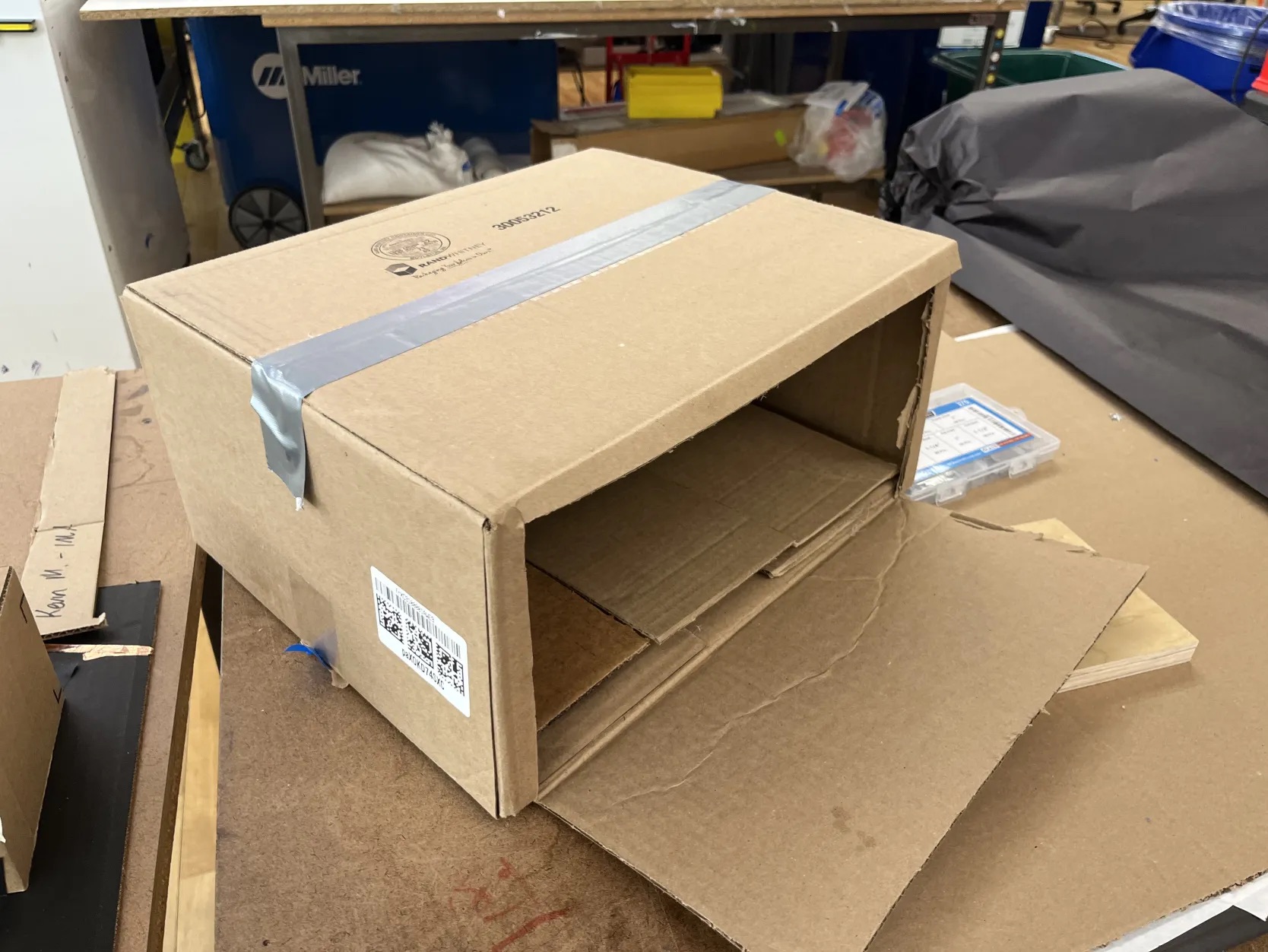
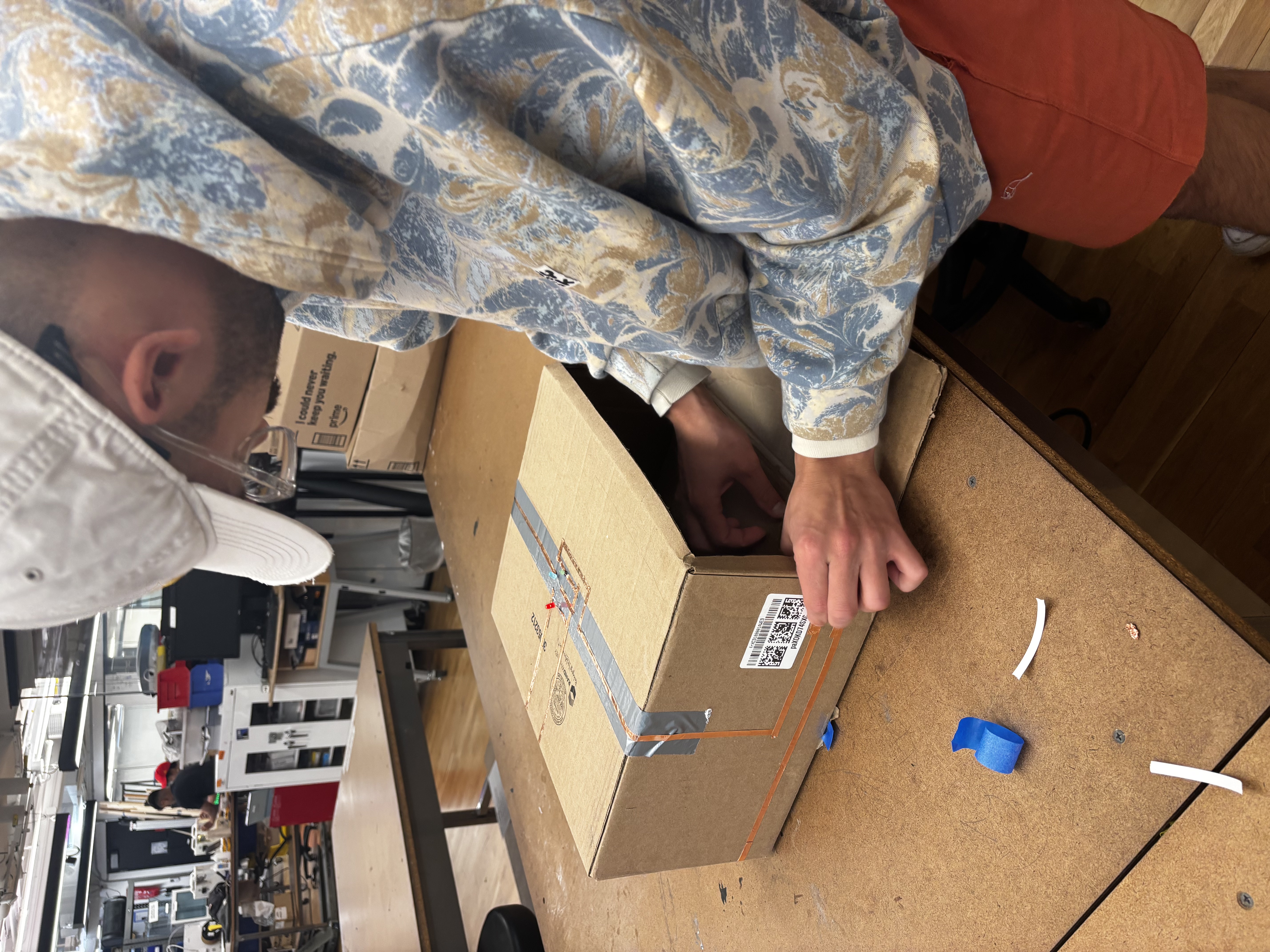
We first ideated with thinking through the needs of a student in an async, random world. After narrowing down the idea of the student seeking divine intervention, we landed on wiring a foot box with multiple switches closing the circuit to light up different LEDs. We started building by finding a box in the Lab that could comfortably fit our feet and contraptions inside. The idea of using pedals to close the circuit came intuitively after seeing different smaller cardboard pieces in the Lab, and looking at cardboard pianos online as DIY projects. We measured and sliced each pedal, as well as a smaller cardboard piece to function as an elevated surface. We used a glue gun to paste the cardboard elevated piece in the middle of the box floor widthwise, then glued the midpoint of each pedal to the top of the elevated cardboard so that the top and bottom of each pedal were naturally lifted above the bottom of the box. After adding copper to the bottom of the pedal and the box floor, this allowed the user to use their foot to manually press the pedal to the floor and connect those two copper bits together to close the circuit.
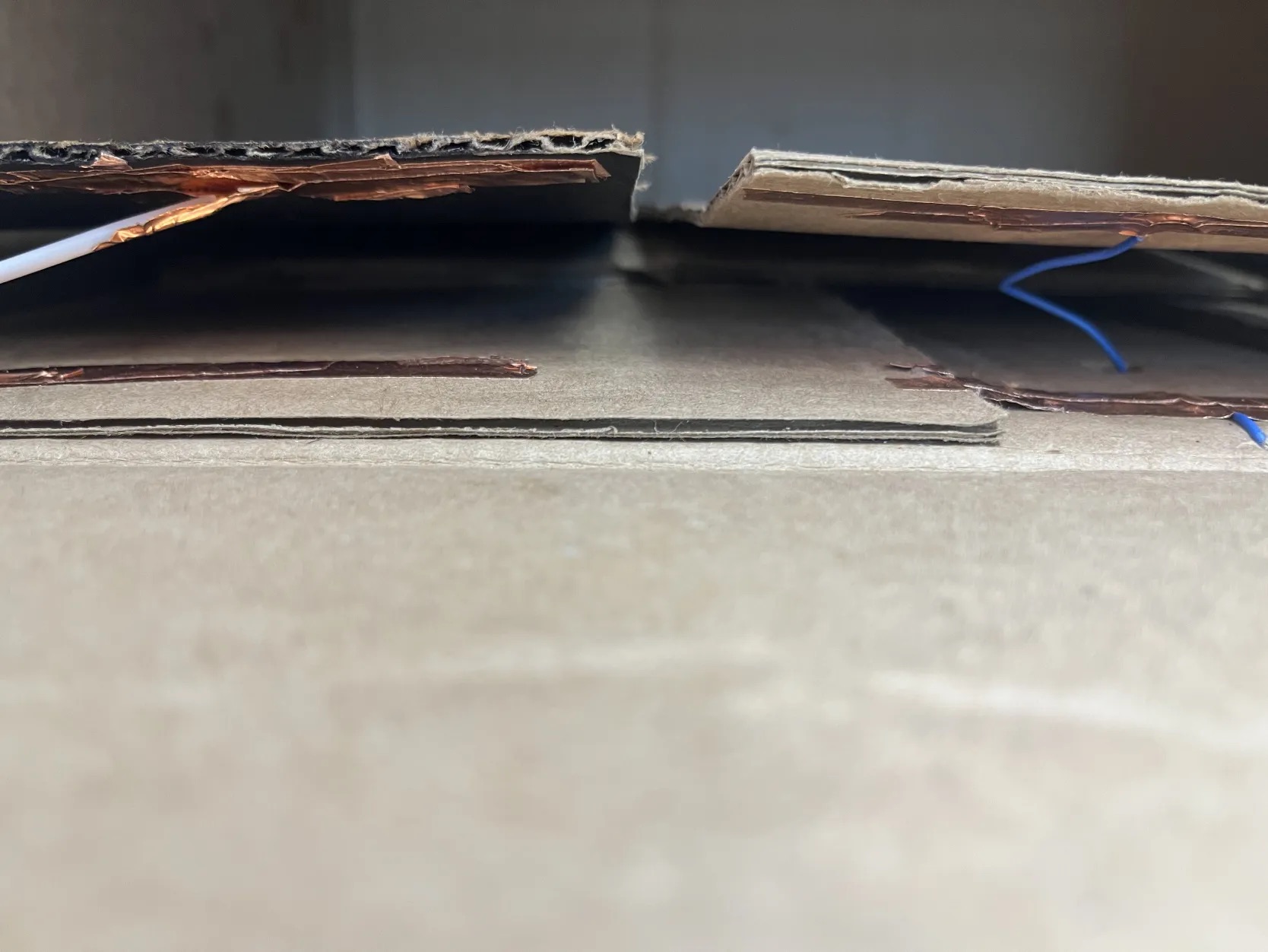
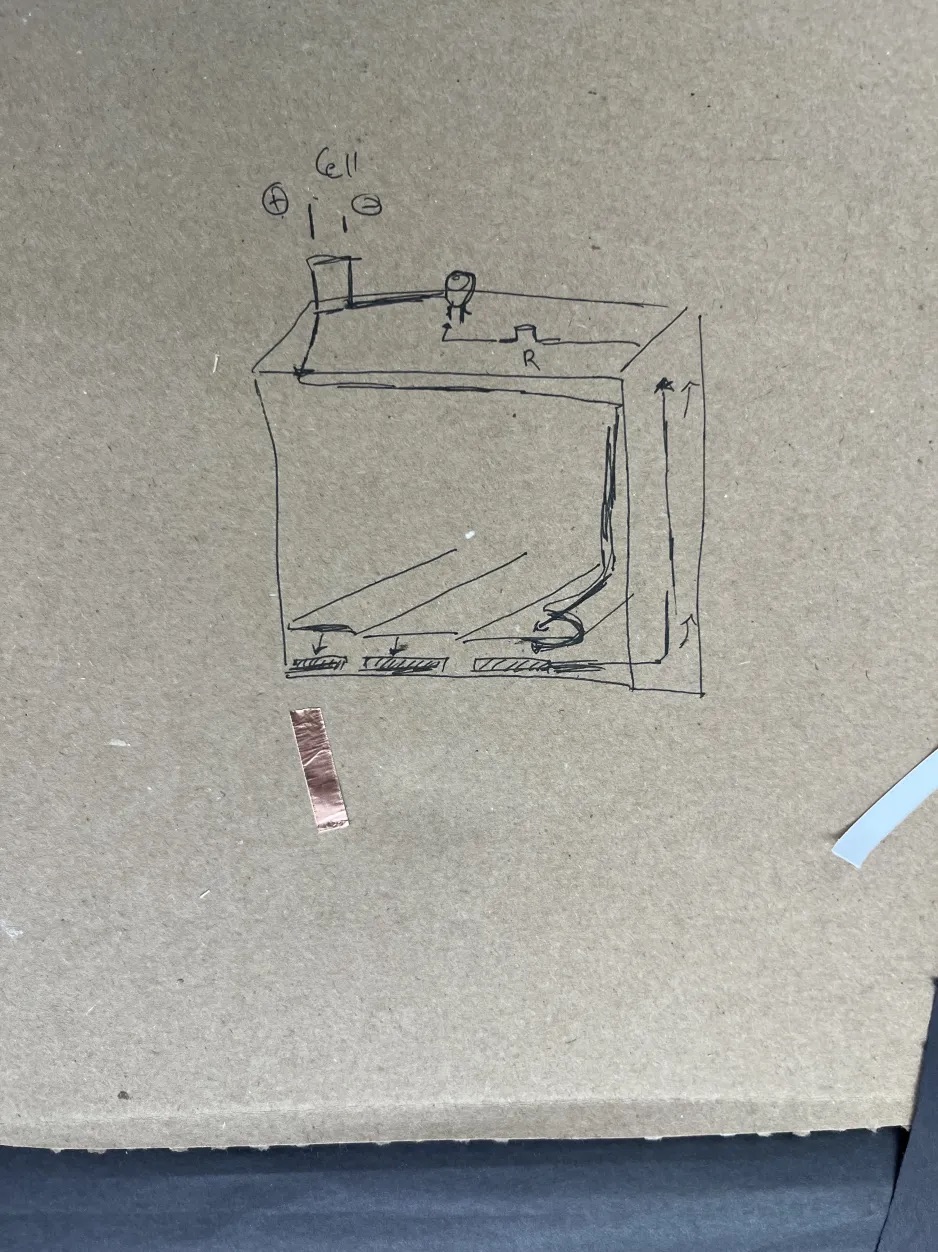
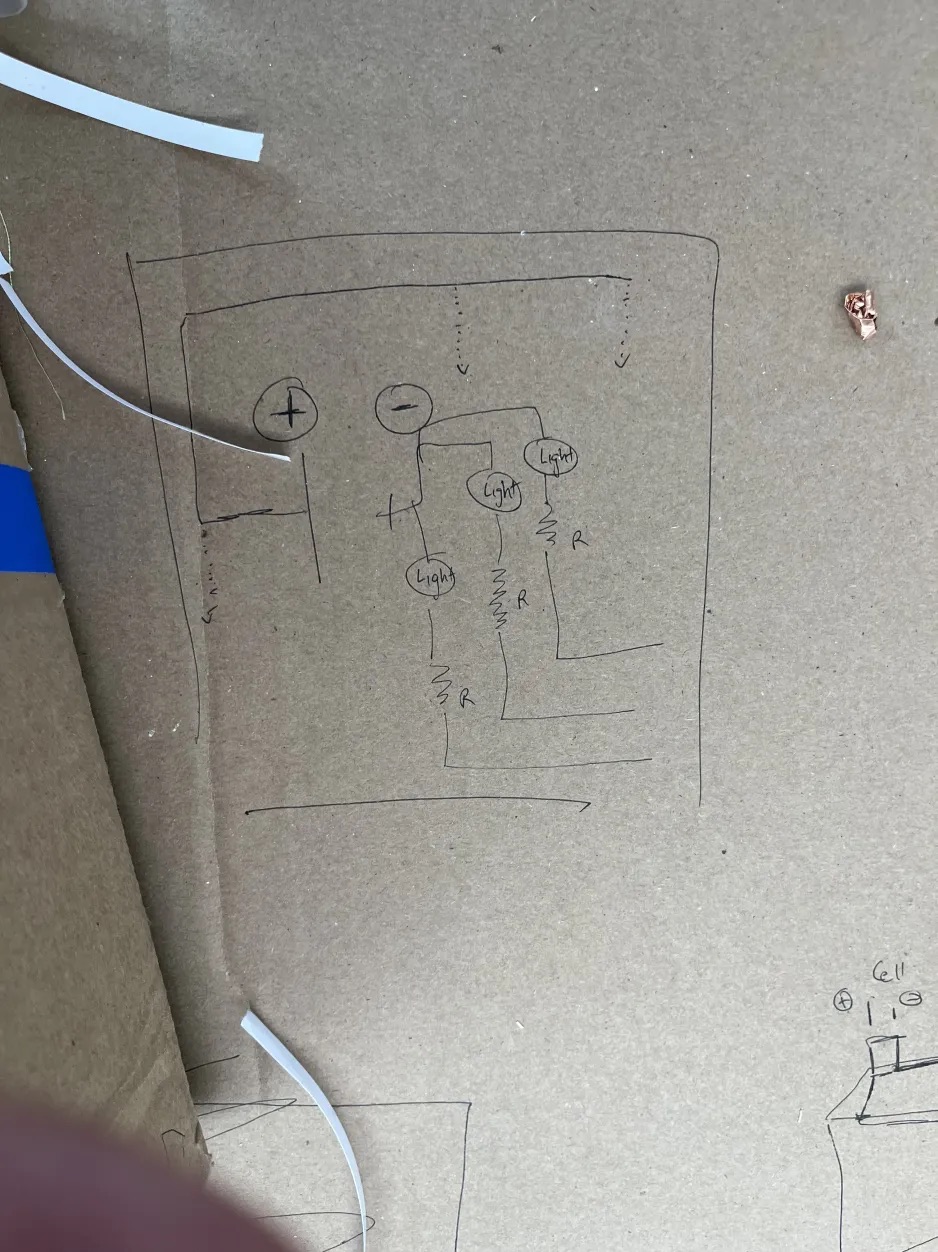
After getting the overall shape of the structure, we drew up some rough circuit diagrams to determine how the battery would route electricity through the pedals closing, past the resistor, and into each individual LED switch. We had to take care to ensure there were proper exits for each wire, tunneling through the cardboard and multiple angles of the box, and connecting at the top.
When it came to wiring, we first laid down copper tape to create a switch for each pedal. Then, with pencil, we drew the path of the rest of the circuit onto the cardboard box. Finally we hooked everything up with the battery and resistors to complete the circuit.
Result
In theory, we’re happy and confident with the circuit we designed. When the contacts work, the LED’s light up just how we wanted. The cardboard pedals designed by Kevin are bouncy and delightful to press. The red LED works reliably. The contact between copper tape with wires and resistors for the green and blue LED’s are not secure enough, and the contact loosens due to mechanical movement with the pedals.
Reflection
We did the best we could with the constraints we have with a standard circuit and the conceptual combination of random interaction, asynchronous communication, and students using their feet to control the device. We wonder how our ideation would have changed had we approached the project from a purely form-first or concept-first approach introduced in Exploratory Making. We found that after re-discussing the work after the class ended from the form and concept perspective, our idea of how the LEDs should look shifted (using RGB), as well as the overall lore of the tool.
The copper tape medium is very finicky, and we learned how important it is to know our medium better before finalizing our design. Prototyping proved a valuable albeit frustrating way to learn how a mechanical component like a foot switch can interfere with a reliable circuit. We would definitely design the shape of the circuit differently.